Anthony Bandiero
Attorney and Senior Legal Instructor, Blue to Gold Law Enforcement Training
A question from an officer in Colorado who found a firearm in plain view on the floor of an unregistered car in a public apartment lot. He cited Cady v. Dombrowski. His colleagues fired back with Caniglia, Valencia and Chavez. He asked Anthony to settle it.
Does seeing a firearm in a vehicle in plain view generally allow us to seize that firearm for community caretaking? Okay, my name is Anthony Bandiero, attorney for Blue to Gold. Let’s get into this.
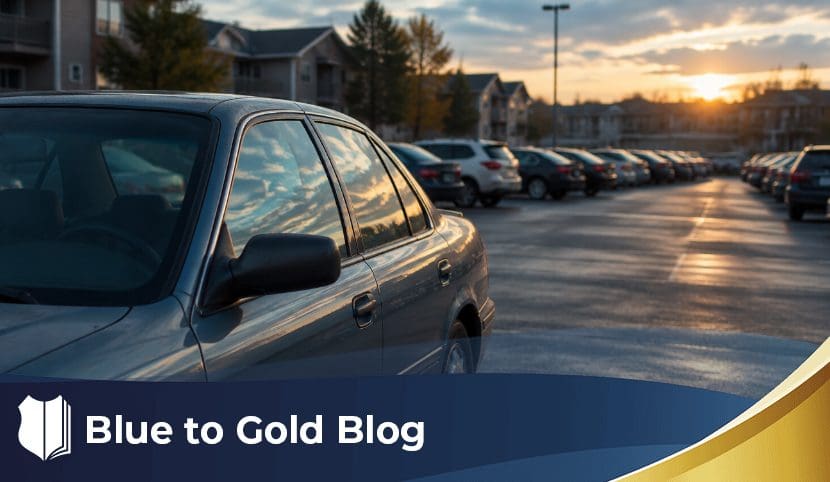
This officer is from Colorado. He says, I observed a firearm in plain view on the floor of the vehicle. The vehicle was unregistered and my attempts to contact the owner were unsuccessful. The vehicle was parked in an apartment complex’s parking lot, not in an assigned spot, and the lot was accessible to the public. The area was vulnerable to burglaries of motor vehicles and motor vehicle thefts. My argument was that the firearm poses a threat to the safety of the community if it fell into the wrong hands.
The officer also cites Cady v. Dombrowski. However, counter arguments say, no, no, no, you are wrong. We got Caniglia v. Strom. We got United States v. Valencia. We got United States v. Chavez.
Okay, so Anthony, can you settle this for us? All right. Let’s go through some case law here.
What did Cady v. Dombrowski allow?
So I think the first place to start is Cady v. Dombrowski. That is a 1973 case involving an off-duty police officer who was drunk. He crashes. He gets arrested for DWI.
And they go back to the impound lot and search it for a firearm because they believed that all off-duty Chicago cops, he was a Chicago cop, carry 24/7, right? So they were worried that he potentially left his firearm in that car and they did not want the firearm to go into the wrong hands. And this impound lot was unfenced, okay. Old school, small town impound lot.
And while looking for that firearm, they found evidence of a murder. So the U.S. Supreme Court upheld it under community caretaking, because they agreed that if the firearm did fall into the wrong hands, if somebody went into that car, whether it’s a tow truck driver or a thief or somebody rummaging around for stuff to steal, that if it fell into the wrong hands it could be a danger and so forth.
So really it came off as, we’re just trying to help this guy, right. We’re not trying to send Dombrowski to prison for anything. We’re just trying to secure his firearm so he gets it back when he’s released.
Okay. Now we also require good faith, right. That is South Dakota v. Opperman, where the Supreme Court said that you cannot use an inventory or community caretaking generally for bad faith reasons.
Why doesn’t Caniglia v. Strom apply to a car?
So now let’s move to Caniglia v. Strom. That case does not apply here, okay. Strom is an enter-the-home case. The officers in Strom, these officers in Rhode Island, entered a home after a guy was taken to the hospital for a mental evaluation, right, because he was threatening suicide. And they entered the home to secure the guy’s firearms. They had no judicial order. They had no consent, allegedly, from the wife. They simply entered to secure these firearms. And what did they call it? Community caretaking.
The problem is community caretaking does not apply to homes. It applies to cars. It applies to people outside the home, you know, people that are unconscious and so forth. You’ve got to find out what’s wrong with them. So that case doesn’t apply.
Why don’t Valencia and Chavez apply either?
Then the counter argument was also United States v. Valencia. That case doesn’t apply here either, because in that case what happened is that Valencia’s car was parked, he pulled into a parking spot at a hotel. And they didn’t see a gun. They didn’t think there was anything dangerous in there. They just wanted to do an inventory.
And the court in Valencia just kind of went through, what is a community caretaking function here? Why are we taking somebody’s car when it’s lawfully parked in a public parking lot and the owner of the lot is not saying get that car out of here? It’s a motel parking lot. And they just went through an analysis and look, it’s not reasonable to take this person’s car under these conditions. That’s what Valencia’s all about. Valencia is not about, hey, we know there’s a gun in the car, we’re just trying to secure it. So that case doesn’t work.
Then they threw out Chavez. Chavez doesn’t work either, because Chavez basically slow rolled his car, you know, he’s getting pulled over, he slow rolled onto his property, okay. And then they knew there was a gun in the car. But the wife, I think it’s the wife, they refer to as a female, but the wife was the registered owner. And she was on scene. She was actually at the house and she’s like, no, I got my car, I’m taking it.
So they towed it anyway and they found the firearm and they found some other stuff. But that doesn’t apply because again, where is the community caretaking function? The gun, she’s going to take the car. She presumptively can have that gun. You can figure that part out.
Was the initial seizure justified under community caretaking?
It’s not a Dombrowski situation. It’s not a situation here where the car is in a high crime area or in a public parking lot and the gun is in plain view. I mean, the cops saw it, so other people can see it. And we’re just trying to hold on to it. It’s unregistered. We don’t know whose car this is. We have no way to get a hold of these people, right. We’re not going to start knocking on 120 doors.
And it’s good faith, right. We’re just trying to hold on to this gun. We’re not trying to send people to prison, okay. We’re just trying to hold on to it for the person to reclaim it. Now, if it does have an issue with it, an obliterated serial number, or we find out that it actually does belong to a convicted felon, then we go from there.
But the question for the court is, was that initial seizure justified under community caretaking? And I think the answer is yes with these facts. Because the cases that were thrown out here don’t apply to that situation. They’re different.
And you know, in fact, look, I like the debate here. This is healthy for us actually to debate. So I’m not trying to make anybody wrong. It may be obvious to me, but only because I have 25 years doing this, right. I mean, this is what I do for a living and I have enough cases under my belt to kind of understand what’s going on here. But my officers out there are just trying to make good case law, and so they’ll see these cases like Chavez and Valencia and say, oh, that must mean that we can’t do it. Well, no, not necessarily. Depends on the facts, right. As the courts say, facts matter.
Should you break the window to get the gun out?
So with these facts, I think it’s fine. Would I be breaking the window and all this kind of stuff? No, I would call a locksmith. I would have my agency pay for that. That just makes sense. We don’t want to make the car more vulnerable to break-ins by breaking the window. So do it the right way and we kind of go from there.
The short version
- Cady v. Dombrowski (1973) is the anchor: securing a firearm so it does not fall into the wrong hands is a community caretaking function.
- Opperman requires good faith. You cannot use inventory or community caretaking for bad faith reasons.
- Caniglia v. Strom is an enter-the-home case. Community caretaking does not apply to homes. It applies to cars and to people outside the home.
- Valencia was about towing a lawfully parked car with no known gun. Chavez had the registered owner on scene, ready to take the car.
- Here: public lot, high crime area, gun in plain view that anyone can see, unregistered vehicle, no way to reach the owner, good faith. I think the initial seizure holds.
- Don’t break the window. Call a locksmith and have the agency pay for it. Don’t make the car more vulnerable to break-ins.
- Facts matter. Stay safe and make good case law.
Related from Blue to Gold
- Major Case!!! Caniglia v. Strom – Community Caretaking and Red Flag Laws
- Breaking a Car Window to Retrieve A Firearm
- Can Police Search a Car After Arresting the Driver?
This article is an edited transcript of Roadside Chat Ep. #966. It is legal training, not legal advice. Check your state law and your agency policy, because both can be more restrictive than the Fourth Amendment.