
Anthony Bandiero
Attorney and Senior Legal Instructor, Blue to Gold Law Enforcement Training
A question from an officer in Texas who gets sent to 911 hangup calls with no information from the caller. Someone answers the door, says everything is fine, and mentions other people are inside. The officer wants to know whether there is an obligation to go in and check on them.
All right guys, this is a question that comes up a lot. It is, when can we enter a home after a 911 hangup? Right. I should really say 911 hang up. And let me give you some context here from my email.
All right, this officer is from Texas. You know, we often get sent to 911 hangup calls with no information provided by the caller. When we get on scene and someone answers the door, they typically tell us everything is fine inside, it was an accident.
My question is, at what point do we have an obligation to go inside the home to check on the welfare of others? So the couple typically asks if there’s anyone else inside, and if they say no and the cop doesn’t have any reason to believe anyone is inside there, then the officer concludes the investigation and leaves.
Now if they tell the officer that someone is inside, I let them know that I want to check on the person, to check on their welfare, and typically give them the option of bringing them to the cop, right, to the door, or the cop is going to potentially make a forced entry and walk past the husband, let’s say, and go check on people.
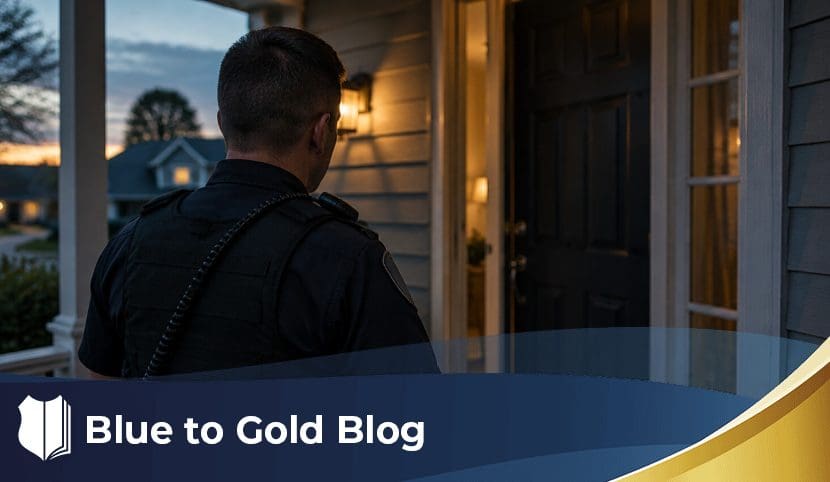
Now let’s say that we get a 911 hangup, and upon meeting the caller at the front door we are informed it was an accident, that they dialed 911 and everything is fine. They then tell us that there are other people inside but no emergency exists. We don’t see anything that would indicate an emergency, don’t hear anything that would give us exigent circumstances to enter the home. The question is, are we obligated to check on the rest of the residents’ welfare inside the home, and if we enter the home without consent or any other exigency, would that be violating the person’s rights?
All right, this is a great question, and you know that this comes up all the time. So let’s just kind of address it.
Is a 911 hangup community caretaking or emergency aid?
Now first of all, the officer kind of recognizes that he did some research and the case law is a little over the place. I will say that the majority of the cases seem to be supportive of the officer’s actions, right, of going in, of making sure that people are okay. 911 hangups can be pretty serious.
But this is 2021. This is not your grandparents’ police department. There was a lot of stuff going down today that would never have gone down even 10 years ago. So the game that we’re playing today is way more advanced. It’s way more protective of your liability.
Okay, so with that said, here’s what I teach. Number one, what is the rule? The rule is this falls under the emergency aid exception. This does not fall under community caretaking. We know that community caretaking does not apply to homes, right? We have that from a U.S. Supreme Court case called Caniglia v. Strom.
Community caretaking is a relatively low standard where cops just want to make sure that people are okay. That’s not the standard that we use anymore. We are definitely in the ballpark of exigency, emergency, urgency, and that falls under the emergency aid exception.
What do you need to push past the husband and check on the occupants?
So therefore, in order for you to push past the husband, for example, and check on the occupants, you’re going to need to be able to articulate some ongoing emergency where time is of the essence. The 911 hangup is certainly a big part of that, but what I would like you to tell me is something more. I’m sure there’s something more.
Okay, if all you have, all you have, is a 911 hangup and the person saying look, it’s just a mistake, you know, the kids are playing with the phone or whatever, I would be careful.
But Anthony, there could be somebody dead or dying in there. I get it. And with freedom comes tragedy, right? So sometimes people do get hurt when you actually respect people’s rights and you don’t necessarily just push your way in on every single 911 hangup simply because it’s a 911 hangup. Accidents do happen. Tragedies also occur. It’s the same argument for the Second Amendment, right? The Second Amendment causes tragedy. It’s just the way of freedom-loving society works.
What does “something more” look like on a 911 hangup?
So my point here is that I would want my cops to have something more than simply a vanilla 911 hangup. I would want to see any blood on the ground. I would want to see the husband acting abnormally nervous. I want to see a history at the house. I want to see broken dishes. I want to hear that the neighbors are saying yeah, they’ve been going at it like cats and dogs. I want to see kids, you know, there’s kids in the house, and you see one of them and they look scared, and so forth.
I just would like cops to have something more. Usually there is something more. Okay, look at the person’s behavior. Is the husband lying to you? Is there any kind of deception there?
Do officers have a legal obligation to check on everyone inside?
And the cop says, do we have an obligation? Well, this may surprise you, but generally speaking the answer is no. Not a legal obligation.
You may have a moral obligation. You may have a policy. You may have your sergeant saying hey look, we’re going to go clear that house, and you go from there, right. But as far as a legal obligation, it’s very hard to hold cops responsible for situations where they don’t go in because they don’t feel that they have the proper ingredients to go in and justify, you know, emergency aid exception, and somebody actually is hurt in the house and they try to sue you. It would almost, it’s very hard. Okay, I’m not saying that they can’t sue you, but it is extremely hard.
But I’m not here with the message of, you know, go about your career and just because they can’t sue you that means you’re not going to do anything. Do the right thing. Though there are some times when the right thing to do is to turn around and leave the house. I mean, it’s just the way it is. That is part of a freedom-loving society.
How many reasons should you have before forcing entry?
So in 2021, okay, and beyond, it’s only going to get harder. If you are going to push your way past that occupant, I really would like you to have several reasons about why do you think somebody in that house needs or wants your help. Needs or wants your help. Tell me why.
I promise you, in the vast majority of these cases, if there is something going on, there’s something there. There’s clues there. Look, open your eyes, look for those things. Look for all the telltale signs that something more is going on there. More than just the simple hangup and the husband telling you that everything is fine, he doesn’t want you in the house.
Okay, but that’s the answer. I wish I had something better. I wish I had something black and white. I don’t have black and white. I can’t tell you number one, hangup equals an entry. That’s not the rule. And you would be very hard-pressed, you’d have a bad day in court, if you went in and you were getting sued, or you know, you’re getting IA’d over this, and you simply said I go in every single time there’s a hangup. That’s not really the rule.
Instead, it’s the emergency aid exception. Tell me why. Okay, that’s the best I can do for you. You have to make these decisions. I can’t make them for you. But I do teach report writing, and I do have a rule of five. Give me five reasons about why you did what you did. You would be surprised, if you really push yourself, how many things are out there.
The short version
- The rule for a 911 hangup is the emergency aid exception, not community caretaking. Community caretaking does not apply to homes after Caniglia v. Strom.
- To push past the occupant, articulate an ongoing emergency where time is of the essence.
- A vanilla 911 hangup, standing alone, is thin. I would be careful.
- Something more: blood on the ground, the husband abnormally nervous, history at the house, broken dishes, neighbors saying they’ve been going at it like cats and dogs, a kid who looks scared.
- Generally there is no legal obligation to go in and check. You may have a moral obligation, a policy, or a sergeant.
- Rule of five. Give me five reasons about why you did what you did.
- It is okay sometimes to back down and to turn around and leave the guy’s house.
Related from Blue to Gold
- Major Case!!! Caniglia v. Strom – Community Caretaking and Red Flag Laws
- When Can Police Force Entry on a Suicidal Subject Call?
- Can Cops Order Suspect Out of Home During DV Call?
This article is an edited transcript of Roadside Chat Ep. #129. It is legal training, not legal advice. Check your state law and your agency policy, because both can be more restrictive than the Fourth Amendment.