
Anthony Bandiero
Attorney and Senior Legal Instructor, Blue to Gold Law Enforcement Training
A Second Circuit decision has officers telling Anthony it overturns what he has taught for years about holding a phone against a tinted window. Recorded from Salt Lake airport, this is his read: the case does not say what people think it says, and the detail that matters is whether the phone touched the glass.
Hey guys, it’s Anthony Bandiero, attorney and senior legal instructor for Blue to Gold Law Enforcement Training, bringing you another roadside chat.
I am broadcasting from Salt Lake airport. I’m going to be heading from here to ILEETA, that’s in St. Louis. I’m going to be teaching there for about a day, and then heading from St. Louis to Austin. I’m going to be teaching for two days for Texas DPS. It’s going to be a phenomenal class. No offense to all my great agencies out there, but I’m sure you can appreciate that sometimes teaching these Texas troopers is a lot of fun. They just have a good time. They got cool hats. It goes from there.
All right, so I want to talk to you about this case. It’s a case out of the Second Circuit. It really is important for what I teach.
What are the two kinds of Fourth Amendment searches?
Before I go into it, let me just teach you a couple of ground rules.
I have been saying for years that when officers hold their cell phone up against a car, up against a tinted window, that that is a search under the Fourth Amendment.
There are two searches under the Fourth Amendment. There’s trespass, and right of privacy, reasonable expectation of privacy.
A reasonable expectation of privacy, it’s a squishy test, but it’s when a subject exhibits a right of privacy, like they want to keep their stuff private. Also, it’s something that society would consider objectively reasonable.
A trespass test is under a case called United States v. Jones. That is a case where when law enforcement physically trespasses onto a protected area, like a motor vehicle, with the intent to gather information, that is a search under the Fourth Amendment.
What actually happened in this Second Circuit case?
Now let’s move over to the case. Here’s what happened.
From what I can read from the case, and I wish the case was a tad clearer on exactly what happened, because I believe that this is going to matter at the Supreme Court level if this case made it that far. But basically, what I can see from this case is this.
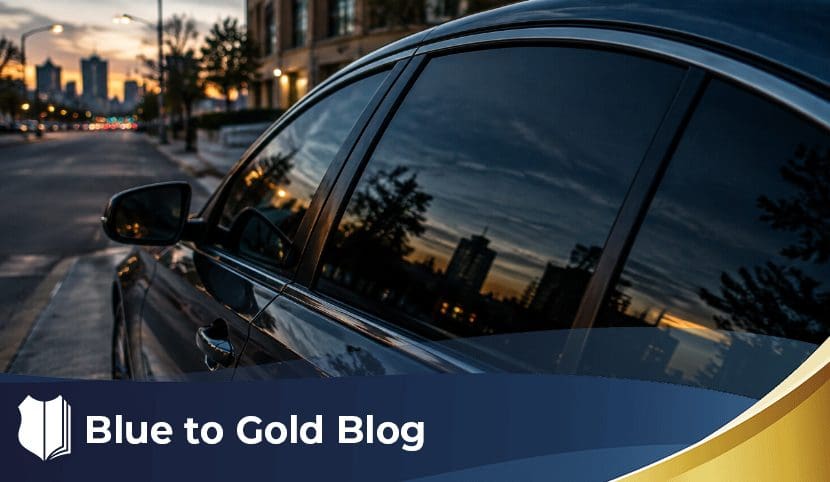
Officers are serving an arrest warrant at the defendant’s apartment. They see his car in the parking lot. An officer goes over to the vehicle and they break out their iPhone. They hover over, and this is very important for the facts, they hover over his tinted windows on his vehicle, and through the iPhone camera app they’re able to see inside the vehicle.
They see what they describe as two 15s. Two firearms. I don’t believe it was AR-15s, I believe that this is calling these 15s. Maybe they’re ten codes, 10-15 for firearm. Regardless.
Then another officer goes to the front windshield, uses his hands to shadow the glass and look inside the vehicle, and they also confirm that not only do they see firearms, but they also see some drugs and so forth.
Then an officer goes back to the window and actually, according to the court, the way I read this case, they physically touch the vehicle with the cell phone. They confirm what they see. Now they go get a warrant.
So what is the defendant’s argument? His argument is twofold. Number one, that when you put that phone hovering onto my vehicle, that violated my reasonable expectation of privacy, and it also was a trespass with the attempt to gather information. So that’s a double search. Searches under both doctrines under the Supreme Court cases.
Did the tinted windows create a reasonable expectation of privacy?
In a nutshell, the court said that this did not violate his reasonable expectation of privacy. Why? Because vehicles are highly mobile, they’re highly regulated. Just because you put tint on a vehicle does not mean that your subjective expectation is objectively reasonable, meaning society is not going to believe that’s reasonable.
I got to tell you, come on. Let’s not forget the intent of the Fourth Amendment.
What I’m trying to say here is, if there was a machine that was put on the highway, and this machine had the capacity to see inside your passenger compartment whether or not you had tinted windows, whether you had a blanket over your rear windows. I’m not talking about driving with a tank that had a little turret cut out. I’m talking about doing things where you’re basically trying to keep things private. The back seat, the back of the Tahoe and so forth. But through this technology, not with trespassing, but through this technology, it was able to see into the vehicle. Would that be a search under the Fourth Amendment? They just did this for a million cars. Okay, give me a break. You know that it would. But according to this court, it would not.
Because you just simply cannot have a reasonable privacy in your vehicle despite putting up tints, presumably putting up a towel on your window and whatnot. Maybe the court says, well, Anthony, a towel is different. I don’t see how. The tint is still obscuring what’s inside the vehicle to the naked eye, whether it’s a towel or it’s tint. But I digress.
Why did the court dodge the trespass question?
So the first thing the court said, this did not violate the person’s reasonable expectation of privacy. The next thing they said is where it’s very important, because a lot of people are reading this case and they’re saying, ah, Anthony, I think this goes against what you’ve been teaching us for many, many years, that touching cars with the cell phone is a search.
Well, I got to tell you, the answer is no. Because really what this court did is they dodged the question. They never answered directly whether or not this would have violated the Fourth Amendment. They simply said, even if, they’re stipulating, even if touching the car was a search, it was not the but-for cause of the search warrant.
What do they mean by that? From what I can gather, they could have probably handled this in a different way, but maybe call it inevitable discovery.
What they’re trying to say here is, remember, the officer did not physically touch the car initially. He hovered over the tint. Maybe because he saw my video. But he hovered over the tint, and then he saw the items in plain view.
If that is true, which obviously we’re going to take it as truth, that is not a trespass search. In order to have a search under trespass, you have to physically touch something. You have to intrude. You have to enter. If you’re hovering over a protected area and looking, even if you’re using technology, it’s not going to be a trespass search. It would have to be analyzed under reasonable expectation of privacy. But remember, the court already said that this did not violate REP. And so that’s already done.
So because it did not violate privacy, and because we have no trespass, because the officer apparently hovered over the tint, we don’t have finding that evidence ultimately from a trespass. It was not, quote unquote, the but-for cause. In other words, they would have found it anyway.
What if the officer had touched the glass first?
The point is, thinking about what’s happening here, I think this case would be much more problematic if the officer touched the vehicle initially, then saw the guns, and that’s what caused them to go get a search warrant.
To me, they should lose that case, because we have cases out of Texas which say that poking tires to see if there’s something on the tire was a search. We have a case out of Saginaw, Michigan, which says putting chalk on a tire for parking enforcement is a search. We have a case out of Utah, I forgot the name off the top of my head, about trying to detect engine heat on the hood of a vehicle being a search.
So how are those all searches, but using your iPhone to look inside a car when it’s parked in a private parking lot with no probable cause whatsoever, how is that not a search if it’s touching the vehicle?
So can you use a cell phone to see into a tinted car?
What is my point? My point is number one, I don’t necessarily agree that this does not violate privacy. I’m not positive on that one, but I’m also not convinced that that’s not a privacy issue.
Regardless, one thing that I’m still adamant about, and with the state of the law as it is right now, with the way I read Supreme Court cases, with the way I read cases on the nation, using your cell phone to physically touch a window, to use that camera to see inside a vehicle, is a search.
And this case does not disagree with me necessarily. In fact it said, for argument’s sake, let’s assume it is a search, but the defendant still loses for different reasons.
You see what I’m trying to say here? Don’t use this case to say that you can now look into cars with cell phones by physically touching them.
If you want to say, all right, well, I’ll use it to hover over a car and not touch it, well, then this is your case. It is absolutely in your favor if that’s what you think. Do I think that? Not necessarily. But I’m willing to debate that one a little bit more, respectfully, because I don’t know for sure. But the trespass issue I’m more confident on, because of the other cases I just told you about.
Now, an officer from Indiana requested this video. He’s a big fan of Blue to Gold. If you’re a big fan of us, I’m a big fan of you. I’m actually a big fan of all cops. But the point is, this cop is using our videos to get it right every single time.
The short version
- Two doctrines: reasonable expectation of privacy, and trespass under United States v. Jones.
- The officers hovered the phone first, saw firearms, and only touched the glass later to confirm.
- The court held the tint created no reasonable expectation of privacy, because vehicles are highly mobile and highly regulated.
- Anthony does not agree: “I’m not positive on that one, but I’m also not convinced that that’s not a privacy issue.”
- On the trespass question the court “dodged the question. They never answered directly.”
- It assumed a search and still ruled against the defendant because the touch “was not the but-for cause of the search warrant.”
- “In order to have a search under trespass, you have to physically touch something.”
- Poking tires in Texas, chalking tires in Saginaw, checking engine heat in Utah. All searches.
- “Don’t use this case to say that you can now look into cars with cell phones by physically touching them.”
- Hovering without contact? “Then this is your case. It is absolutely in your favor if that’s what you think.”
Related from Blue to Gold
- Can an Officer Compel Rolling Up Windows for a Window Tint Inspection?
- Binoculars in Public Areas
- Drones on Property Rights and Privacy
This article is an edited transcript of Roadside Chat EP#824. It is legal training, not legal advice. Check your state law and your agency policy, because both can be more restrictive than the Fourth Amendment.